Introduction
The 2019-nCoV, an RNA virus that can infect the body, is the agent of the Coronavirus Disease 2019 (COVID-19).
1 As of this writing, it is a member of the coronavirus family, specifically the respiratory system, which was initially discovered in Wuhan, China, in late 2019.
2 In Jordan alone, the virus has been linked to over 8,400 deaths and over 695,390 confirmed cases.
3,4 The COVID-19 pandemic has caused enormous disruptions in the social, economic, and personal domains of life, as well as unusual demands on the population's health institutions. While it is commonly known that COVID-19 causes respiratory symptoms and other associated physical complications, there is growing scientific evidence that the human aspect of COVID-19 infection and the pandemic as a whole can have a substantial impact on mental health, contributing to the higher rates of psychological distress, anxiety, and depression.
5 Moreover, rising interest has been placed on its possible impact on reproductive health, especially in women, who might be more susceptible to pandemic-related stressors and physiological imbalances, which include the physical and psychosocial effects on health.
6
The menstrual cycle is a complex and dynamic process governed by hormonal changes. It is a crucial part of reproductive health and well-being.
Menstrual disturbances may include irregular menstrual cycles, abnormal bleeding, or alterations in menstrual flow and may have different causes such as hormonal imbalance, stress, lifestyle change, and some medical conditions.
7
Since COVID-19 is likely to affect physiological systems, it is reasonable to expect that the infection would affect women in their work and family spheres to a greater extent than others.
8 As the outbreak had impacted almost everyone, women encountered more particular barriers at work and home.
Such effects as anxiety and tension are chronic symptoms of psychological discomfort that have been prevalent among communities across the world during the epidemic.
9
Numerous reports of the widespread negative effects of the COVID-19 epidemic have permeated the scientific literature.
10,11 It has affected people's mental health all across the world.
12,13 Empirical research conducted during the pandemic consistently reveals high levels of anxiety, depression, and general psychological discomfort.
14,15
There is still little data on the connection between COVID-19 infection, female mental health, and menstrual health, despite an increase in research on the subject of COVID-19’s effects on mental health. The lack of a thorough investigation into the relationship between COVID-19-related psychological distress and changes in menstrual function represents a gap in the literature. The current study intends to investigate the impact of COVID-19 infection on the characteristics of menstrual cycles and the psychological well-being of Jordanian women in order to address this shortcoming. By focusing on this population, the study aims to clarify potential connections between menstrual cycle abnormalities and mental health issues in the post-COVID-19 infection. A better comprehension of these relationships can lead to a more thorough understanding of the health outcomes attained by women both during and after the pandemic and aid in the development of more tailored clinical and public health solutions for the Jordanian setting.
Significance of the Study
It is essential to understand how COVID-19 infection affects Jordanian women's menstrual cycles and mental health is crucial. The pandemic has had a significant impact on Jordan, with several verified cases and associated economical and health consequences.
16 In addition, women make up a sizable portion of Jordan's labour force and are vital to families and the community. The examination of these possible impacts will help healthcare professionals and policymakers devise specific interventions and support measures to address the specific needs of women affected by the pandemic. Last but not least, the study of how COVID-19 affects the mental health of women in Jordan and their menstrual cycles can become part of the body of knowledge worldwide and help better understand the complex effects of this viral infection.
Methods
Study Design
In our research, a cross-sectional design was used, and the study was conducted in Jordan to examine how COVID-19 infection affects the menstrual cycle and the mental health of infected women. In this research, we took into consideration a normal cycle length that lies between 21 and 35 days, oligomenorrhoea, which is a period that lies between 35 days and 3 months, polymenorrhea, which is characterised by a cycle length that is lower than 21 days, and menorrhagia, characterised by heavy and or prolonged cycles.
| Term |
Definition |
| Normal menstrual cycle |
21–35 days |
| Oligomenorrhoea |
Interval of 35–90 days between cycles |
| Polymenorrhea |
Cycle length less than 21 days |
| Menorrhagia |
Heavy and/or prolonged bleeding (self-reported) |
| Pre-COVID period |
Three months before the positive test |
| Post-COVID period |
Six months after a positive test |
Participants and Inclusion Criteria
Females who had positive test results of COVID-19 during Mar 1, 2020, to Feb 28, 2021, were included in the study. Only those participants who fulfilled this criterion were recruited for the study.
Data Collection
To gather information, the authors employed an online survey. To increase comprehension and reach the local community, the questionnaire was initially developed in English and then translated into Arabic. It was divided into four sections.
Informed Consent
The consent form, which described the goals of the study and how the data would be used, was included in the first section of the questionnaire.
Demographic Information
The second part of the questionnaire collected demographic data from participants, including age, municipality of residence, parity, age at marriage, occupation, income, marital status, weight, and height.
| Section |
Key content |
# items |
| Consent |
Study purpose: voluntary participation |
1 |
| Demographics |
Age, residency, parity, occupation, income, weight, height |
10 |
| Menstrual history |
Cycle length pre/post, dysmenorrhea, menorrhagia, intermenstrual bleeding |
12 |
| Mental well-being |
GAD-7, PHQ-9 items |
16 |
| Clinical COVID data |
Date of positive test, severity, comorbidities |
4 |
Menstrual Cycle Assessment
The third part of the questionnaire focused on participants' menstrual cycles before and after COVID-19 infection. It contained questions on the length of the cycle, the period of menstruation, intermenstrual bleeding, pelvic pain, loin pain, dysmenorrhea, menorrhagia, oligomenorrhea, polymenorrhea, and vaginal discharge.
Mental Well-Being Assessment
The mental well-being was assessed with the help of a validated psychological assessment tool. The anxiety symptoms measured using self-report were assessed using the Generalised Anxiety Disorder-7 (GAD-7) scale, which is commonly used to screen and determine the severity of anxiety problems. The GAD-7 has seven items assessing the intensity of anxiety-related symptoms that a participant has experienced within a certain period of recollection. Each item has four responses with a four-point Likert scale, with the lowest one being not at all (score 0) and the highest one being almost every day (score 3). The cumulative GAD-7 score is obtained by adding all the answers to the 7 items, and this gives the cumulative score that falls in the range of 0-21. An increase in the total scores will be associated with an increase in the severity of anxiety symptoms, which will make it possible to conduct a quantitative evaluation of the psychological state of the participants. The cut-off value was 10 in this study, as this is a standardised tool that is a reliable measure of anxiety and would allow a consistent comparison of mental well-being across the participants and the interpretation of the outcomes related to anxiety in the context of COVID-19 infection.
17
The PHQ-9 (Patient Health Questionnaire-9) was employed to research self-reported depression. The levels of participants were assessed on a scale of 0 to 3 on the levels of their depression, where the first position was not at all depressed, followed by almost daily, feeling depressed. The recall time was 2 weeks, and the overall score ranged from 0 to 27. There was an increased likelihood of depression with a higher score level, indicating the likelihood of severe depression.
18
Statistical Analysis
The Statistical Package of the Social Sciences (SPSS), version 24, was used to statistically evaluate the data. Descriptive and inferential statistical methods were used to examine patterns and relationships in the data set. In order to provide an overall picture of participant characteristics, menstrual cycle characteristics, and mental health outcomes, categorical variables were summarised using frequencies and percentages. The menstrual cycle characteristics before and after the COVID-19 infection were compared using the McNemar test or chi-square test. When the expected cell count was insufficient to meet the chi-square test’s requirements, Fisher’s exact test was employed to ensure the analysis’s accuracy. The relationship between COVID-19 infection status and variation in menstrual cycle patterns was examined using statistical tests. In order to analyse, the pre-COVID-19 period was defined as three months prior to a positive test, and the post-COVID-19 period as six months following infection confirmation. This temporal classification made it possible to compare the outcomes in the pre-infection and post-infection periods in a systematic manner. Every statistical test was two-tailed, and a significant correlation between the variables being examined was indicated by a p-value less than 0.05.
Results
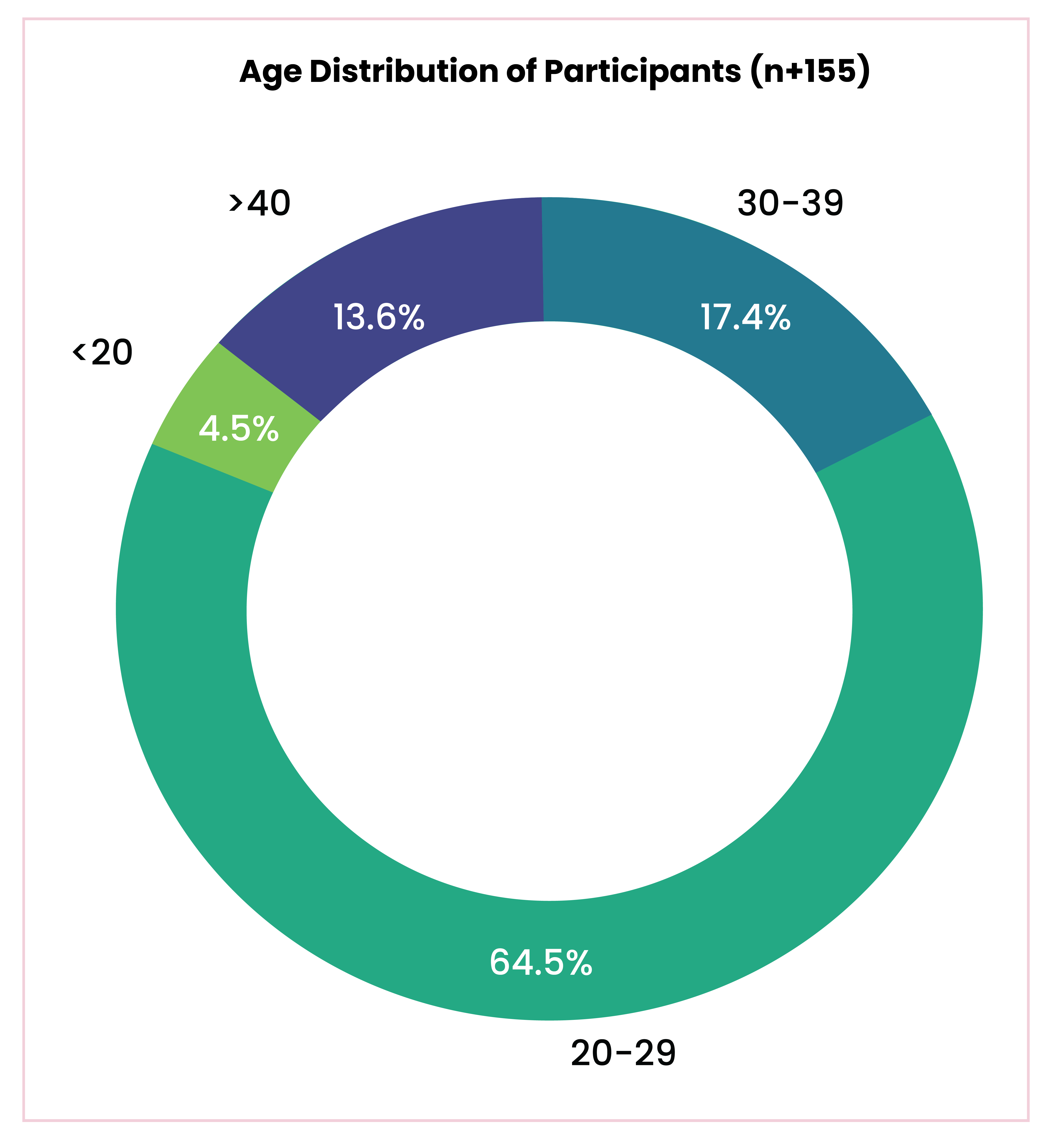
A total of 155 women completed the questionnaire. The majority, 100 (64.5%), of the women were between 20-29 years of age, 77 (49.7%) were employed, and 46 (29.7%) were either high school or university students (Figure 1 and Table 3).
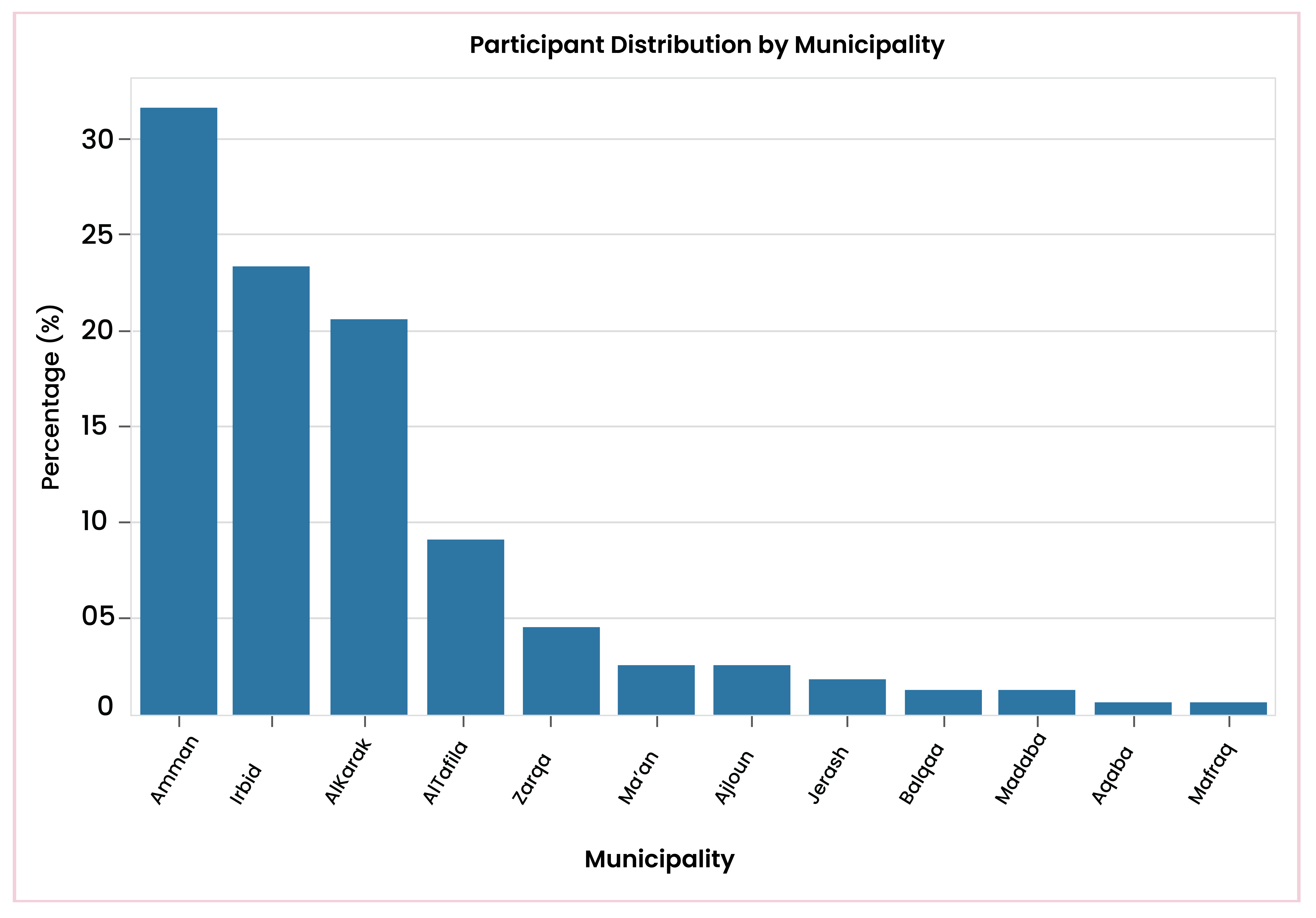
More than half, 90 (58.1%), of the participants were single. About one-third of participants, 49 (31.9%), live in Amman, followed by 36 (23.2%) in Irbid and 32 (20.6%) in AlKarak (Figure 2 and Table 3).
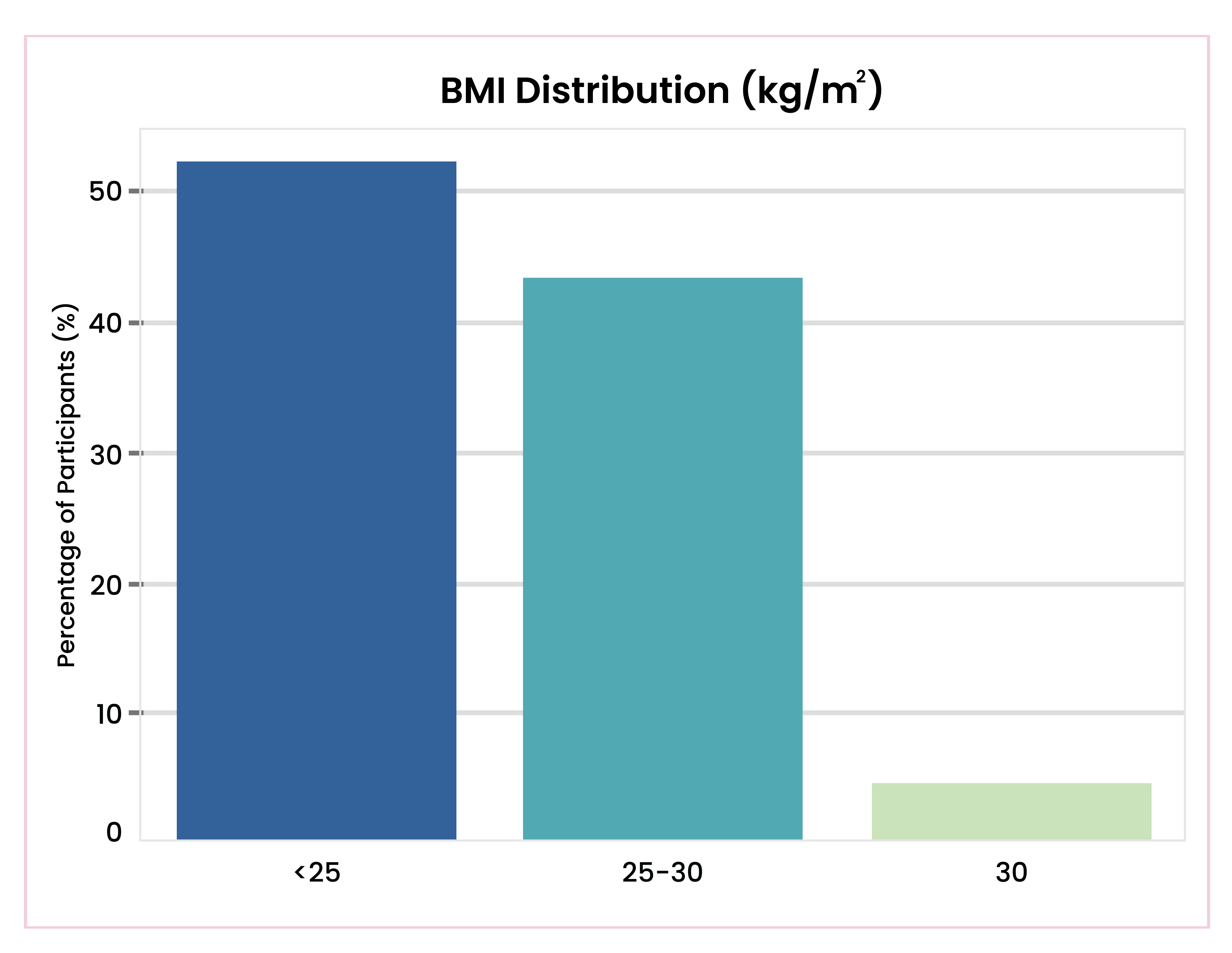
BMI distribution was relatively heterogeneous, with 52.3% of participants having a BMI of less than 25 kg/m² and 4.5% having a BMI of more than 30 kg/m² as shown in Figure 3.
Most married participants, 52 (85.2%), were married between 20 and 25 years of age, and only 2 (3.3%) married before age 20. Overall, 31 (47.7%) of women were multiparous with parity between 1-4, 24 (36.9%) were multiparous between 5-9, and only 10 (15.4%) were nulliparous, as shown in Table 3.
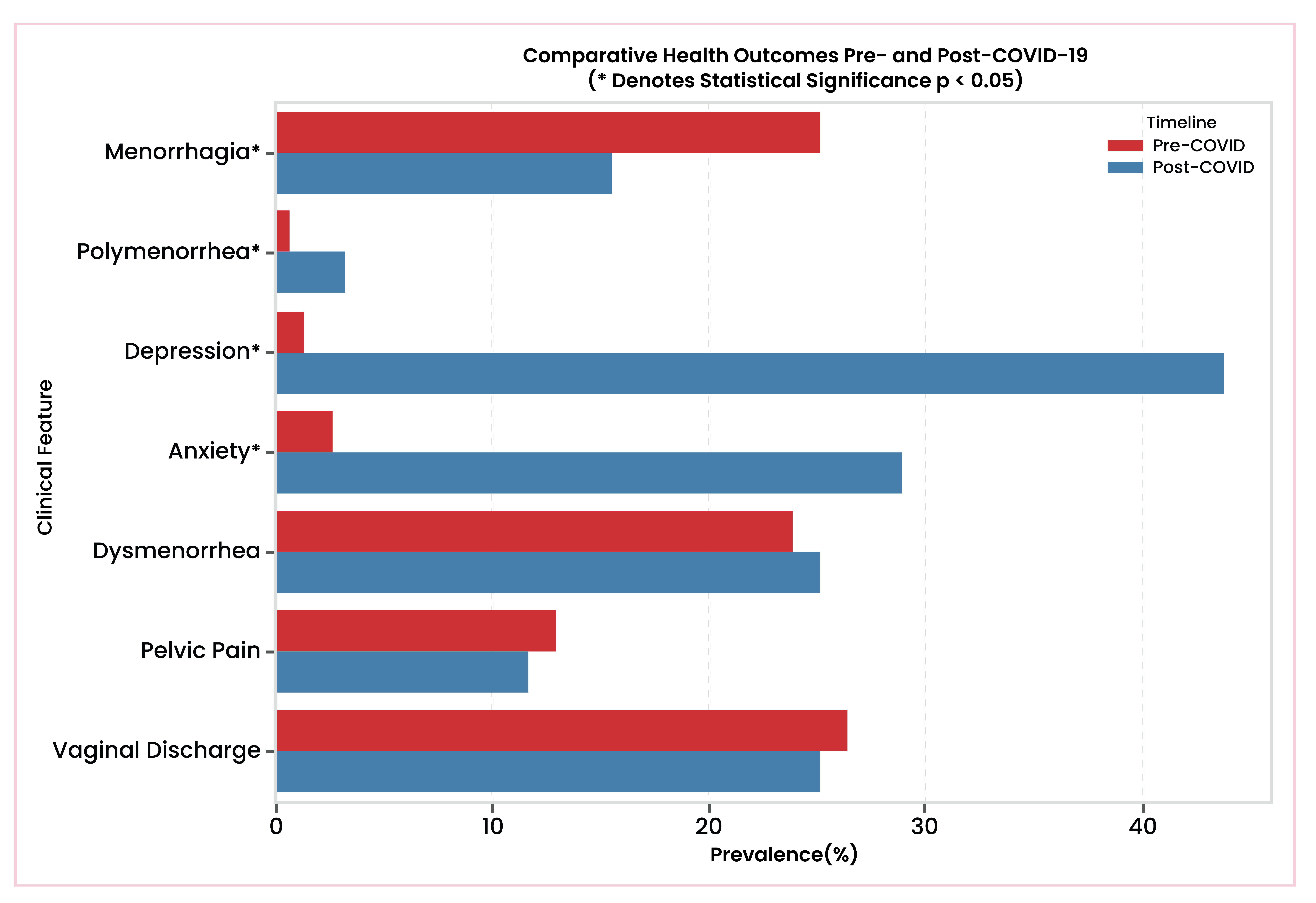
No significant statistical differences were observed between the percentage of participants experiencing vaginal discharge, pelvic pain, loin pain, or dysmenorrhea before and after COVID-19 infection. However, there was a notable increase in polymenorrhea following COVID-19 infection compared to before (3.2% vs. 0.6%, p=0.046). Conversely, the prevalence of menorrhagia was significantly higher before COVID-19 infection compared to the post-infection period (25.2% vs. 15.5%, p=0.048) (Table 4).
Figure 4 shows the occurrence of the symptoms before the COVID-19 infection, where there was 1.3 and 2.6 percent of those who reported depression and anxiety respectively. Conversely, Table 4c has found that depression (43.9%) and anxiety (29.0%) were greater in post-COVID-19 analysis, which has attained statistical significance (p < 0.001).
Discussion
Our study is the sole investigation focusing on the connection between menstrual cycle changes and mental well-being in Jordanian women with COVID-19 infection. Among the participants in our study, a majority of 64.5% fell within the age range of 20–29 years. These findings align with previous reports by Yuksel et al. and Aolymat et al., wherein the latter study observed that around 70% of Jordanian women infected with COVID-19 were between 25 and 34 years old.
1,4 According to the observed findings, one might say that women aged 20–29 had more chances to take public transport; therefore, they are more likely to take it. This difference is the opposite of other areas, where a considerable percentage of Asian women infected with COVID-19 were mostly aged 40–60 years. The same trends have been observed in other studies carried out in Europe and North America, and have suggested that women aged 45–55 years were at the highest risk of contracting COVID-19 infection.
19 This fact may be explained by the introduction of online education to the university and high-school students as early as Mar 15, 2020, which was not universal among all employed women. The absence of this feature, in turn, puts them at higher risk of getting exposed to the virus.
20
Moreover, we found that there is a correlation between the low income of a family and the higher risk of contracting the COVID-19 virus. This is attributed by the fact that more people can be found in low-income households and they might encounter problems like poor nutrition, poor sanitation and increased cases of uncontrolled chronic diseases as noted in a study by Akseer et al.
21 Additionally, because of the inaccessibility to privately-owned cars, lower-income households usually also use public transportation more frequently, exposing them to potential risks of infection. There were more single-infected women as per our findings. This may be credited to the fact that married and divorced women are usually required to be at home to monitor the online learning of their children. On the other hand, single females had higher chances to go back to work and travel without any predicament. The overwhelming majority of participants of our study, which is about 99.4% were handling the COVID-19 infection at home. This percentage can be explained by the younger age of the patients under analysis and the relatively reduced risk of serious morbidity in younger people. Hospital admission rate was reported to be higher in China, with percentages ranging between 1% and 4.3% in people aged 20-29 and 40-49, respectively.
22
Loin pain and dysmenorrhea were reported most commonly within the first month after infection, with fewer reports between one and six months and only a small minority reporting symptoms at six months post-infection. We observed a statistically significant increase in polymenorrhea following COVID-19 infection (from 0.6% to 3.2%, p = 0.046), indicating more frequent short cycles in the post-infection period. Conversely, the prevalence of menorrhagia declined after infection (from 25.2% pre-infection to 15.5% post-infection, p = 0.048). Mental health outcomes demonstrated marked deterioration after infection: depression increased from 1.3% pre-infection to 43.9% post-infection, and anxiety rose from 2.6% to 29.0% (both p < 0.001). These sizeable increases suggest a substantial psychological burden associated with COVID-19 infection in this cohort and are consistent with reports documenting elevated rates of depression and anxiety among COVID-19 survivors in other settings.
17,23 Multiple factors such as sustained physical symptoms, isolation, socioeconomic stressors, and perceived stigma may contribute to these findings.
The observed increase in polymenorrhea after infection may reflect acute physiological effects of the viral illness, stress-mediated hypothalamic-pituitary-ovarian axis disruption, or behavioural changes (for example alterations in sleep, activity, or medication use) occurring during or shortly after infection. Jing et al. suggested that ovarian dysfunction caused by the viral illness could be responsible for such disturbances.
24 The simultaneous and pronounced rise in anxiety and depressive symptoms raises the possibility that psychological distress contributed to the menstrual alterations observed, consistent with literature linking stress and mood disorders to menstrual irregularities.
7,25 The decline in reported menorrhagia in the post-infection period is notable and contrasts with some prior reports; Phelan et al. described increases in bleeding abnormalities following COVID-19.
25 Potential explanations for the reduced self-reported heavy bleeding include changes in medication use (including treatments for anxiety or depression), reporting bias, or transient cycle-to-cycle variability. Further investigation is required to elucidate causal pathways.
Limitations
Limitations of the study remain. The cross-sectional design and retrospective self-reporting introduce potential recall bias and preclude causal inference. The snowball sampling strategy and online data collection may limit generalisability and favour younger, more connected participants. Additionally, the dramatic rise in post-infection depression and anxiety warrants cautious interpretation; symptom reporting may be influenced by contemporaneous pandemic stressors and the absence of baseline clinical diagnostic confirmation.
Conclusion
The research evidence is that the COVID-19 infection is related to the measurable variation of menstrual patterns and a significant negative shift in mental health among women in Jordan. Although the majority of gynaecological symptoms failed to be significantly different between pre-infection and post-infection, there was a statistically significant increase in polymenorrhea and a decrease in menorrhagia after COVID-19 infection. Depression and anxiety, conversely, registered a significant and statistically significant increase during the post-infection period, which meant that the disease had a significant psychological effect. Most participants had these symptoms in the first six months after infection, and they decreased thereafter. On the whole, the results propose that COVID-19 has an impact on the reproductive and mental health of women even when they are treated at home without any hospitalisation. The findings point to the significance of encompassing mental health screening and menstrual health evaluation in post-COVID care in women. More longitudinal research is warranted to elucidate the mechanisms underlying COVID-19 infection, evaluate long-term patient outcomes, and inform more targeted interventions to reduce the reproductive and psychological impacts of COVID-19.